NON-FICTION - SCIENCE
New

John Le Carre - A Perfect Spy
AU$25.00
New
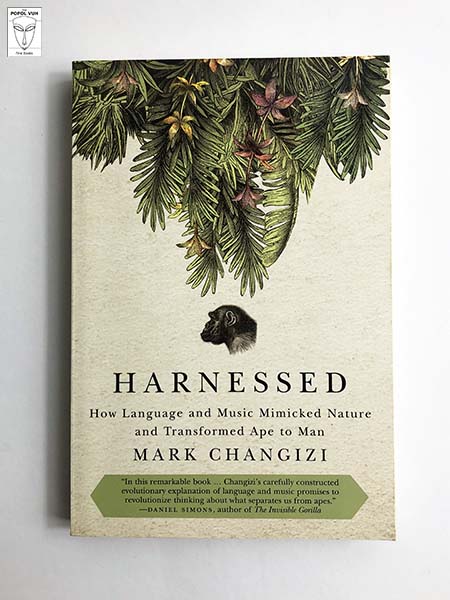
Mark Changizi - Harnessed
AU$15.00
ISBN: 978-1-935-61853-9
Publisher: Benbella Books - 2011
Synopsis: The scientific consensus is that our ability to understand human speech has evolved over hundreds of thousands of years. After all, there are whole portions of the brain devoted to human speech. We learn to understand speech before we can even walk, and can seamlessly absorb enormous amounts of information simply by hearing it. Surely we evolved this capability over thousands of generations. Or did we? Portions of the human brain are also devoted to reading. Children learn to read at a very young age and can seamlessly absorb information even more quickly through reading than through hearing. We know that we didn't evolve to read because reading is only a few thousand years old. In Harnessed, cognitive scientist Mark Changizi demonstrates that human speech has been very specifically "designed" to harness the sounds of nature, sounds we've evolved over millions of years to readily understand. Long before humans evolved, mammals have learned to interpret the sounds of nature to understand both threats and opportunities. Our speech—regardless of language—is very clearly based on the sounds of nature. Even more fascinating, Changizi shows that music itself is based on natural sounds. Music—seemingly one of the most human of inventions—is literally built on sounds and patterns of sound that have existed since the beginning of time.
Condition: Light shelf wear on the exterior of the paperback; Pages are clean, unmarked and in very good condition;
Please enquire Buy NowNew
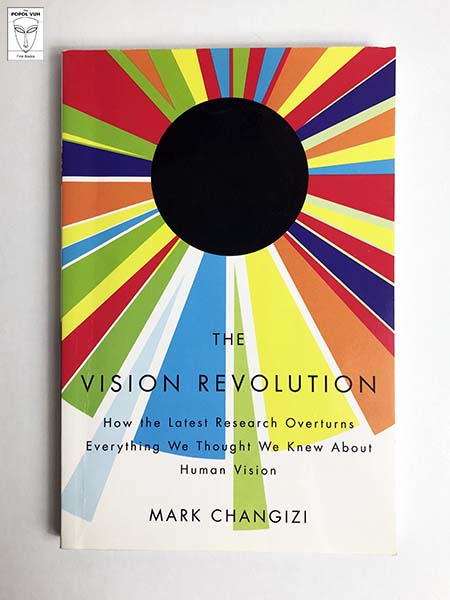
Mark Changizi - The Vision Revolution
AU$10.00
ISBN: 978-1-935-25176-7
Publisher: Benbella Books - 2010
Synopsis: A radically new perspective on human vision is emerging. Groundbreaking research by evolutionary scientist and neurobiologist Mark Changizi is driving a revolution in our understanding of human vision. In asking why we see the way we do, Changizi overturns existing beliefs and provides new answers to age-old questions. Why do our eyes face forward? While binocular vision was helpful to our primate ancestors, its importance for 3-D vision is exaggerated. Squirrels jump from branch to branch just fine with sideways-facing eyes and many athletes, including Hockey Hall of Famer Frank McGee, play with only one eye. HINT: We evolved in a highly leafy environment. Why do we see in color, when most other mammals do not? Its not because it helped our ancestors find ripe fruit. Our color vision has evolved to be extremely sensitive to specific sets of color changes. HINT: Primates with color vision, like us, are the only ones who have areas of bare skin. Why do we see optical illusions? Its not the result of glitches in our visual system. Optical illusions can be traced back to the same specific property of vision. HINT: We are able to catch a ball coming at us much more effectively than we should given the speed at which our brains process visual input. Why do we absorb information so readily by reading? Its not because weve evolved to read; evolutionarily, reading and writing are recent developments. HINT: Language is designed to exploit skills weve refined over tens of millions of years. In The Vision Revolution, Changizi details the conclusions of his innovative fieldwork and their mind-blowing implications for our understanding not just of human vision, but of the way we interact with the world in which we live.
Condition: Light shelf wear on the exterior of the paperback; A few pages are marked; Pages are clean and in very good condition;
Please enquire Buy Now